Healthcare · 8 min read
Healthcare and clinical photography: what a medical brand needs
Healthcare photography sits at the intersection of high stakes and tight constraints. The images need to be credible enough that clinicians accept them, human enough that patients recognise themselves, and technically clean enough that they work in contexts from a hospital's patient portal to a pharma brand's display network. Getting all three right requires a different kind of production planning than most brand photography.
We've produced in clinical environments across Europe and the MENA region — surgical suites, ICU corridors, rehabilitation wards, emergency departments, and laboratory environments. What follows is what we've learned about making these shoots work.
Access: the brief before the brief
The biggest variable in a healthcare shoot is access. Whether you're shooting in a live clinical environment or a controlled set built to replicate one, the access negotiation happens before the creative brief is finalised — and it shapes what's possible more than any other factor.
In live clinical environments, access typically means:
- Infection control protocols. What can be brought into which zones, what has to be covered or excluded, and which areas require sterile compliance. This directly affects what equipment can be used.
- Patient privacy zones. Even where general photography is permitted, specific areas, rooms and corridors may require patient consent for any photography, and some may be excluded entirely.
- Staff availability windows. Clinical staff have schedules; a shoot requires coordination with those schedules rather than working around them on the day.
- A hospital or facility liaison. Without an internal coordinator who understands both the clinical environment and the production requirements, shoot days in live clinical facilities fail. This person is not optional.
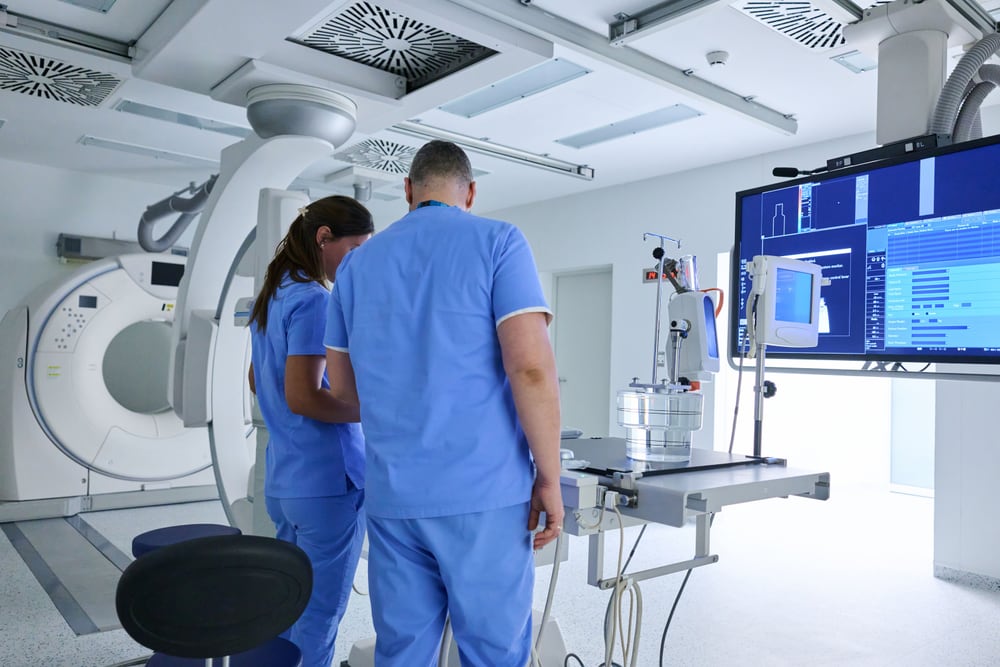
Clinical environment shoot — controlled lighting within infection zone protocols, staff as talent with signed consent.
Consent frameworks for healthcare photography
Healthcare photography requires more robust consent processes than most commercial work. In clinical environments, three categories of subjects typically require different consent approaches:
- Staff as talent. Healthcare professionals photographed in their professional capacity need employer consent for use in commercial communications, individual written consent for image use, and clarity on whether images may be used in a way that implies clinical endorsement of a product or service.
- Patients as talent. Patients — even if healthy volunteers — photographed in clinical contexts require both individual consent and, in many jurisdictions, additional disclosure if the photography will be used in commercially distributed healthcare communications. Standard model releases are insufficient; specialist healthcare release forms are required.
- Simulated patients. Where real patients are excluded or the brief requires controlled talent, simulated patient setups (professional models or actors playing patients) require explicit disclosure in any commercial use — a "simulated patient" or "models used" credit is expected by regulators in most markets.
Technical approach in clinical environments
Clinical environments present specific technical challenges that drive kit choices:
Mixed lighting. Hospitals are lit with a combination of fluorescent overhead, surgical LED, task lighting and natural daylight — all at different colour temperatures, all constantly changing as staff move through spaces. A light source that controls the key and fill allows consistent, matched output across an entire day's production regardless of what the ambient does.
Space constraints. Corridors, treatment rooms and lab environments are built for clinical function, not for photography. Compact lighting setups that produce professional-grade output without requiring large stands or extensive cable management are essential. For clinical zones, battery-powered strobes eliminate the cable hazard entirely.
Rapid reposition. A clinical environment doesn't wait for photography. When a real environment is used, setups have to come down and move quickly. A two-person crew rather than a large production team is usually more effective.

Educational and healthcare environments share similar production constraints — controlled lighting, fast repositioning, minimal footprint.
What the brief should specify
A well-formed healthcare photography brief typically needs to answer:
- Live clinical environment or controlled build? (The two have completely different access requirements and timelines.)
- What specialties or departments need to be represented?
- Are the subjects staff, patients or simulated (models)?
- What are the usage rights requirements — territory, duration, media types?
- Are there existing visual language guidelines from the brand or institution that the photography must match?
- What regulatory requirements apply in the target markets for the images?
The regulatory question matters more than it might seem. Healthcare communications in the EU, GCC and North American markets each carry different visual disclosure requirements. A shoot planned only for one market and later repurposed for another may require re-clearance or additional on-image disclosure. Plan the usage geography before the talent is cast.
Planning a healthcare or clinical brand shoot?
Brief the productionRelated reading: Healthcare & medical photography service → · Corporate & diversity photography → · Case studies →