Corporate · 6 min read
Corporate photography that works across five years of annual reports
The failure mode of corporate photography is sameness — a library that looks exactly like every other organisation's annual report photography. The second failure mode is inconsistency — this year's team portraits lit differently to last year's, the CEO's headshot on a background that doesn't match the board. Both problems have the same fix: a visual language written before the camera is unpacked.
We've been shooting annual reports, D&I campaigns and corporate communications for the same clients for years at a time. What we've learned is that the brief determines whether the library compounds in value or fragments with every new shoot cycle.
What corporate photography actually has to do
Corporate and institutional photography serves at least four distinct use cases simultaneously: the annual report (print, high-resolution, formal); investor communications (controlled, credible, international); recruitment and employer brand (human, honest, diverse); and media and press (editorial quality, tight crop, licensing-ready). A shoot that produces genuinely usable assets for all four is rare — but it's what a multi-day corporate production should deliver.
The temptation is to optimise for one. The annual report gets the best light and the best real estate; recruitment gets the leftovers; press gets whatever's in the library. If you've seen this happen, you know what the output looks like. The fix is to plan all four use cases before the shoot day schedule is written.
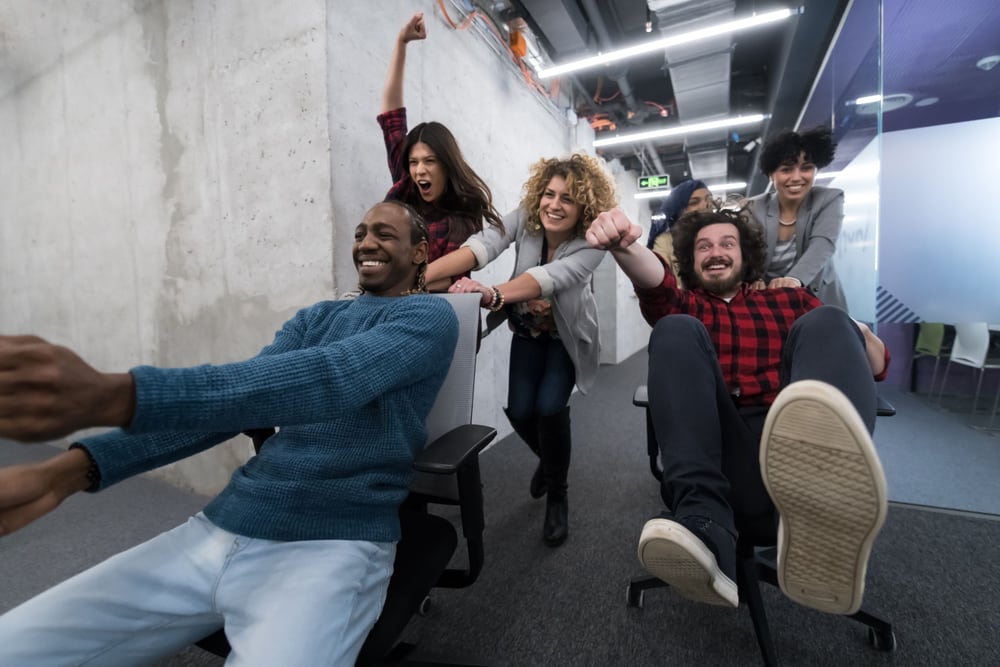
Group corporate portrait — planned lighting and background kept consistent for five years of annual report use.
Diversity and inclusion photography: what "authentic" actually means
Every major corporate communications team is now briefing D&I imagery. The briefs vary from excellent to genuinely counterproductive. The good ones have something in common: they don't describe the demographics they want to see, they describe the situations and relationships they want to portray.
The difference matters in production. "Show a Black woman in leadership" is a casting note. "Show a group decision-making moment where the most senior person in frame is not the most prominently lit or positioned" is a direction. The second brief produces an image that feels true rather than performed — and that difference is legible to the viewer at a glance.
A few things that make D&I briefs work in practice:
- Cast with the brief, not around it. Diverse casting decided after the brief is written produces tokenism. Build the demographic requirements into the model search from day one.
- Avoid costume-diversity. Everyone in the same corporate attire photographed in the same way, with diverse faces swapped in, reads exactly as staged as it is. Dress codes, environments and contexts should also reflect real variation.
- Shoot for cropping. An image that requires the subject to be centred to communicate diversity fails in a horizontal banner where the subject is cropped to one side. Plan for the actual layout, not the full frame.

Diversity and inclusion campaign imagery — cast to represent the actual organisation, not a demographic checklist.
The visual language brief: what to write before the shoot
A visual language document doesn't need to be long. It needs to contain three things:
- Light character. Hard, directional and dramatic? Soft, wrapping and natural? Mixed available and artificial? Each has a distinct emotional register and tells a different story about the organisation. Decide one and apply it everywhere.
- Colour palette range. What backgrounds, clothing ranges and environmental tones are in and out of scope? This doesn't mean everything has to be the same colour — it means the colours that appear together should be curated rather than accidental.
- Relationship between subject and environment. Does the background give information about the organisation (factory floor, trading floor, clinical environment)? Or is it neutral so the subject travels across media? Both are valid choices, but they're different productions.
Once this document exists, each subsequent shoot cycle applies it rather than reinventing it. Five years in, the library reads as a body of work rather than a collection of individual sessions.

Environmental corporate portrait — subject placed in a real working environment rather than a neutral background.
What a corporate shoot day should deliver
If you're briefing a corporate shoot and you're not asking for motion alongside stills, revisit that decision. A sixty-second culture video, a thirty-second recruitment cut and a set of quote-card clips for LinkedIn can all come from the same shoot day with a second camera operator. The incremental cost is low; the incremental value — especially for recruitment — is high.
On the stills side, plan for the usage hierarchy before the day starts: which images need to be horizontal (press, landscape banners), which need subject left or right (split-page print layouts), which need a clean area for headline text (OOH, display). A shoot that produces usable assets for every layout type is one that was planned for every layout type — it doesn't emerge from an unstructured session.
Planning a corporate photography cycle or annual report shoot?
Brief the productionRelated reading: Corporate & business photography service → · Diversity & inclusion service → · Healthcare & clinical photography →